Choose "Make this ad premium" at checkout.
Understanding Integrated Starter-Generator (ISG) Failures in Modern Vehicles London
- Location: London School, London, London, United Kingdom
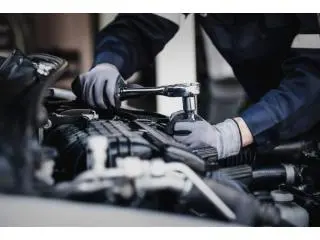
The automotive landscape has shifted dramatically toward electrification, and the Integrated Starter-Generator (ISG) is at the heart of this transition for many modern internal combustion engines. Unlike traditional vehicles that use separate units for starting the engine and generating electricity, modern "mild hybrid" systems consolidate these functions into a single, high-performance component. The ISG is responsible for the seamless "stop-start" functionality we see at traffic lights, where the engine shuts down to save fuel and restarts almost instantly. However, because this component is under constant mechanical and electrical stress, it is prone to specific failure modes that can leave a driver stranded or facing expensive repairs. Understanding these signs is the first step for any enthusiast or aspiring technician.
When an ISG begins to fail, the symptoms are often more subtle than a traditional starter "click." Because the ISG is integrated into the drivetrain—sometimes replacing the flywheel or driven by a high-tension belt—its failure can manifest as performance irregularities or electrical gremlins. For those looking to master these complex systems, enrolling in a professional car mechanic course is essential. These programs provide the technical depth needed to differentiate between a simple battery issue and a catastrophic failure within the ISG's internal inverter or windings. As vehicles become more reliant on 48V architectures, the demand for technicians who can diagnose these high-voltage components continues to surge.
The Warning Signs of ISG Performance Decay
One of the most common early indicators of a failing ISG is a "harsh" or delayed engine restart. In a healthy stop-start system, the transition from a dead stop to a running engine should be nearly imperceptible and happen in a fraction of a second. If you begin to notice a significant jolt when the engine fires back up, or if the cranking sound seems labored and loud, the ISG may be struggling with internal resistance or thermal degradation. Modern ISGs are often subjected to extreme heat because they are positioned close to the engine block. Over time, this heat can cause insulation breakdown in the copper coils, leading to a loss of torque that makes the "start" function feel sluggish.
Another red flag is the frequent "Start-Stop Unavailable" message on the dashboard. While this can sometimes be caused by a low 12V auxiliary battery or extreme ******t temperatures, a persistent refusal of the system to engage often points to the ISG's inability to communicate with the Engine Control Unit (ECU). The ISG isn't just a motor; it's a sophisticated sensor that monitors crankshaft position. If the internal sensors within the ISG fail, the ECU will disable the stop-start feature as a safety precaution to prevent the car from stalling in traffic.
Electrical Fluctuations and Charging Issues
Since the ISG also acts as the vehicle’s generator (replacing the traditional alternator), a failure will directly impact the vehicle’s electrical health. You might notice your headlights flickering or the infotainment screen dimming momentarily during a restart. This happens when the ISG fails to transition efficiently from "motor mode" to "generator mode." In a mild hybrid system, the ISG is responsible for recuperative braking—recovering kinetic energy and turning it into electricity to charge the 48V lithium-ion battery. If you notice that your fuel economy has suddenly dropped or that the vehicle no longer feels like it’s "slowing down" aggressively when you lift off the throttle, the regenerative braking circuit within the ISG might be compromised.
Severe failures can lead to "isolation faults," where high-voltage current leaks into the vehicle's chassis. This is a dangerous condition that modern safety systems are designed to detect instantly. If your car displays a "Check Hybrid System" warning and refuses to move, it may be due to the ISG’s internal power electronics failing. For someone who has completed acar mechanic course, these symptoms are clear indicators to check the inverter cooling system. Many high-output ISGs are liquid-cooled; if the dedicated coolant pump fails or the lines become clogged, the ISG can overheat and shut down the entire electrical architecture of the vehicle to prevent a fire.


Useful information
- Avoid scams by acting locally or paying with PayPal
- Never pay with Western Union, Moneygram or other anonymous payment services
- Don't buy or sell outside of your country. Don't accept cashier cheques from outside your country
- This site is never involved in any transaction, and does not handle payments, shipping, guarantee transactions, provide escrow services, or offer "buyer protection" or "seller certification"
Related listings
-
 Bajaj CNG Bike On Road Price Bangalore – Expected Price, Mileage & DetailsVehicles - Bangalore (Karnataka) - April 18, 2026
Looking for the Bajaj CNG bike on road price in Bangalore? Get the latest expected pricing, features, and cost breakdown including registration and insurance. Bajaj’s upcoming CNG bike is set to revolutionize the segment with exceptional fuel e...
-
Bajaj Dominar 400 On Road Price Bangalore – Price, Touring Specs & OffersVehicles - Bangalore (Karnataka) - April 18, 2026
Check the Bajaj Dominar 400 on road price in Bangalore with all-inclusive costs like RTO, insurance, and accessories. Built for touring, the Dominar 400 offers superior power, comfort, and highway stability. Visit Khivraj Bajaj showroom Bangalore to ...
-
Bajaj Pulsar 220F On Road Price Bangalore – Updated Price & FeaturesVehicles - Bangalore (Karnataka) - April 18, 2026
Explore the Bajaj Pulsar 220F on road price in Bangalore with a full cost breakdown including insurance and registration. The iconic 220F is known for its semi-faired design, powerful engine, and long-distance comfort. Visit Khivraj Bajaj Bangalore f...